Thursday, January 12, 2012

Folkpunk

Does the media in your life ever start to meld into weird little personal sub-genres? Mine does. I'm not even sure what I want to call this one, but maybe if you read this entry and look into/already know some of these stories, you'll see what I mean.

I encountered most of the following books, musical artists, and other things before, but watching the first few seasons of the CW's Supernatural is what really kicked me off thinking about this new (entirely made up) sub-genre of mine. The show is soooo atmospheric and pretty much everything that makes me think of these as linked can be found on Supernatural. Small, run-down towns, the (lonely) open road, deserted buildings, half-forgotten folklore, demons (personal or otherwise), vintage.... stuff, the blues, America, and, it almost goes without saying, the supernatural. There are other things I could tack on- urban fantasy, folklore/-music, sometimes rustic (or even rust-belt) settings with a strong and authentic sense of place... Does anyone already have a name for this? Dark Americana? Folkpunk? Oo I kind of like that..... dibs on the name if it ever becomes a Thing, like Steampunk!

Anyway, here are the media odds and ends that have been floating around in my head:

Supernatural

 Two brothers travel the country, hunting the demon that killed their mother. Along the way they encounter ghosts, spirits, helhounds and other things which bump in they night. They bump back, trading barbs and pop-culture references along the way. Lots of fantastic standalone episodes, excellent atmosphere, and plenty of genuinely scary scenes. This series is so good, it made me like Kansas. o.o


Neko Case


Love. Her. I'm no audiophile and I don't even know much about music, so I don't really know what to say here. She has a really unique, soulful voice, a twangy guitar, and super evocative lyrics. Even if you've never heard of her, I'm sure you've heard one or two of her singles used in the backgrounds of shoes. A recent episode of True Blood ended with her "I Wish I Was the Moon Tonight." The songs that especially fit with this theme are "Fox Confessor Brings the Flood" and "Make Your Bed." Really though, her whole "feel" fits.


Robert Jordan (no, not that one)


If you haven't heard this guy's story, you've been missing out. Legend has it that Mr. Jordan went to a crossroads and traded his soul to the Devil in order to master the guitar. He plays a mean blues song, so who's to say he didn't succeed? As mentioned on the show Supernatural (and hey, lest I lose some of my very scant music cred, I knew this before the show thankyouverymuch), his lyrics are full of references to the otherwordly. The song above is "Hellhounds on My Trail," about being pursued by the Devil's own hounds. There is an even more directly related song, "Cross Road Blues," possibly referencing the belief that one would meet the Devil at a cross road to sell one's soul.

(If you've seen the Coen Brothers' film O Brother Where Art Thou, this might sound familiar to you. The character Tommy is based on Robert Jordan.)


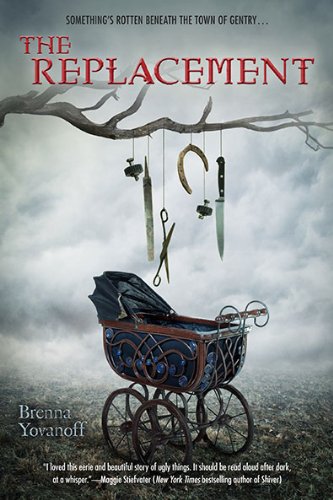
The Replacement, Brenna Yovanoff

 I've already raved about this book here. Really dark. Really good.


The Boneshaker, Kate Milford

 Thirteen-year-old Natalie Minks loves machines, particularly automata—self-operating mechanical devices, usually powered by clockwork. When Jake Limberleg and his traveling medicine show arrive in her small Missouri town with a mysterious vehicle under a tarp and an uncanny ability to make Natalie’s half-built automaton move, she feels in her gut that something about this caravan of healers is a bit off. Her uneasiness leads her to investigate the intricate maze of the medicine show, where she discovers a horrible truth and realizes that only she has the power to set things right.

Set in 1914, The Boneshaker is a gripping, richly textured novel about family, community, courage, and looking evil directly in the face in order to conquer it. -Plot summary borrowed from Goodreads

What this summary misses out on is the dusty, eccentric character of Arcane, Natalie's beloved hometown. This is a tiny bit steampunk with rich storytelling, a set of quirky small-town characters, and some seriously unsettling villains. Oh, and lots of bicycles. And how can you not love a children's/tween's book with Demonology as an official subject heading?


Tuck Everlasting, Natalie Babbitt

 Doomed to - or blessed with - eternal life after drinking from a magic spring, the Tuck family wanders about trying to live as inconspicuously and comfortably as they can. When ten-year-old Winnie Foster stumbles on their secret, the Tucks take her home and explain why living forever at one age is less a blessing that it might seem. Complications arise when Winnie is followed by a stranger who wants to market the spring water for a fortune. -Plot summary borrowed from Goodreads

 Remember this from elementary/middle school? This and the actually pretty decent Disney movie version definitely line up with the theme.

On a weird side note, I heard Fastball's "The Way" while reading this book, and got it into my 9 year old head that the song was written about the book. I know now that's not the case, but it still matches pretty well.


American Gods, Neil Gaiman


American Gods is Neil Gaiman's best and most ambitious novel yet, a scary, strange, and hallucinogenic road-trip story wrapped around a deep examination of the American spirit. Gaiman tackles everything from the onslaught of the information age to the meaning of death, but he doesn't sacrifice the razor-sharp plotting and narrative style he's been delivering since his Sandman days. -Borrowed from Goodreads

I couldn't skip this book, one of my favorites since high school. For anyone interested in mythology, folklore, the power of places or the idea of national/cultural identities- or if you're just looking for a gripping story- this is a must read.  


Big Fish

After a string of mediocre movies, director Tim Burton regains his footing as he shifts from macabre fairy tales to Southern tall tales. Big Fish twines in and out of the oversized stories of Edward Bloom, played as a young man by Ewan McGregor and as a dying father by Albert Finney. Edward's son Will (Billy Crudup) sits by his father's bedside but has little patience with the old man's fables, because he feels these stories have kept him from knowing who his father really is. Burton dives into Bloom's imagination with zest, sending the determined young man into haunted woods, an idealized Southern town, a traveling circus, and much more. The result is sweet but--thanks to the director's dark and clever sensibility--never saccharine.  -Plot summary borrowed from Amazon

This film is gorgeous and has its own very definite sense of style (hardly surprising, it is a Burton film). There are so many things to love her, not least the haunting journey Bloom takes on his way from his tiny birthplace to Make His Way in the World. It's not all, or even mostly, dark though. If you haven't seen it could be a great Netflix option.


Vanishing Hitchhiker, Jan Harold Brunvan


The Vanishing Hitchhiker was Professor Brunvand's first popular book on urban legends, and it remains a classic. The culmination of twenty years of collection and research, this book is a must-have for urban legend lovers. -Plot summary borrowed from Goodreads

For when you've run out of Supernatural episodes, or are feeling nostalgic for the early, "freak of the week" feel. 


Weird U.S.

You might also want to check out the Weird U.S. series. This began as a series of magazines documenting local folklore, legends, abandoned creepy places, anomalies, and other oddments. There is a website as well as plenty of print books which can be found pertaining to your area. As a bonus, you and your friends can hop in your Mystery Vans and check out the places mentioned for yourselves!


I thought about adding Miss Peregrine's Home for Forgotten Children to this list, but it wasn't my favorite book of the year, and besides, it's definitely more English. Are there any things that seem like they would fit with this list that you can think of? Or do you have any weird little sub-genres of your own?


Monday, December 19, 2011

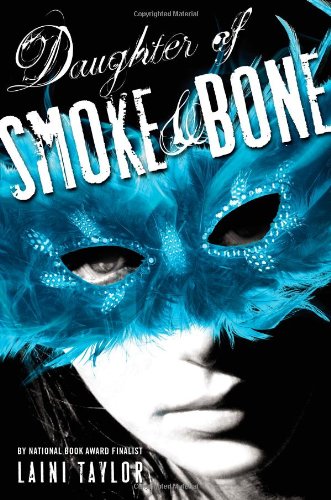
Daughter of Smoke and Bone

Daughter of Smoke and Bone by Laini Taylor

Around the world, black handprints are appearing on doorways, scorched there by winged strangers who have crept through a slit in the sky.

In a dark and dusty shop, a devil's supply of human teeth grown dangerously low.

And in the tangled lanes of Prague, a young art student is about to be caught up in a brutal otherwordly war.

Meet Karou. She fills her sketchbooks with monsters that may or may not be real; she's prone to disappearing on mysterious "errands"; she speaks many languages--not all of them human; and her bright blue hair actually grows out of her head that color. Who is she? That is the question that haunts her, and she's about to find out.

When one of the strangers--beautiful, haunted Akiva--fixes his fire-colored eyes on her in an alley in Marrakesh, the result is blood and starlight, secrets unveiled, and a star-crossed love whose roots drink deep of a violent past. But will Karou live to regret learning the truth about herself?
-Plot summary borrowed from Goodreads

I'd walked past this book a dozen times in bookstores and every time I thought "Oo what a pretty cover... But 'winged stangers'? Star-crossed love? Meh..." Then I noticed the bit about a mysterious shop, monsters, and an interestingly named, blue-haired heroine. That was enough to convince me to give the book a chance and I am so glad I did. 

Taylor's writing is fantastic. I cared instantly about Karou, couldn't wait to learn more about the "monsters" in her sketchbook, and was completely drawn into the shadowy streets of Prague. It may seem redundant to point out the magic realism in a fantasy book, but that's honestly one of my favorite things about this book. Even the mundane seems magical thanks to Taylor's lush writing, and it makes you feel that even our own world is full of weird, strange, terrifying and wonderful things just around the corner. Her writing style reminds me of books & stories by Neil Gaiman, Charles DeLint, Alice Hoffman and even Jorge Luis Borges, and I don't mean to imply that she is copying any of them. She's just that good. 

I'd write more about the plot, but I think this is one of those books where the more discoveries you make for yourself, the better. I will say that I loved it, that it is one of my favorite books I've read all year, and that the ending will leave you on tenterhooks for the sequel.

Sunday, December 11, 2011

Why Labyrinth is a Classic, Or: Why Sarah Would Kick Bella's Butt

**Another article copied by me, Emily, for ease of reading and commenting. Enjoy! 
Suburban Fantasy, Gender Politics, plus a Goblin Prom: Why Labyrinth is a Classic
Muppet Week on Tor.com: Suburban Fantasy, Gender Politics, plus a Goblin Prom: Why Labyrinth is a Classic
Labyrinth was Jim Henson’s second collaboration with artist Brian Froud, following The Dark Crystal four years earlier. Labyrinth was clearly a very different, more expansive type of project; Henson and Froud were joined by George Lucas as executive producer, Monty Python’s Terry Jones wrote the screenplay, and rock demigod David Bowie signed on to star, as well as write and perform the movie’s soundtrack.
Whereas The Dark Crystal is often seen as Henson and Froud’s freewheeling homage to fantasy àla Tolkein, Labyrinth is much more structured and far more aware of its influences; it’s also wonderfully allusive and meta at points, filled with references to the Brothers Grimm, Hans Christian Andersen, L. Frank Baum, Lewis Carroll, Maurice Sendak, and Walt Disney. And yet the movie doesn’t limit itself to clever references — it’s very clearly participating in the classic tradition of works like The Wizard of Oz, the Alice books, and Where the Wild Things Are, in which a young protagonist escapes a humdrum existence into an exotic, sometimes threatening, alternative reality.
Muppet Week on Tor.com: Suburban Fantasy, Gender Politics, plus a Goblin Prom: Why Labyrinth is a Classic
The film opens with our teenaged protagonist, Sarah, lost in her own little world, preferring to hang out in costume reciting plays in the park than she is in “normal” teenaged stuff like dating. The first ten minutes of the movie do a stellar job of setting up Sarah as the heroine of her own suburban fairy tale, the put-upon Cinderella who stomps her way huffily through interactions with her more-exasperated-than-evil stepmother and nice-but-clueless dad. It’s a tribute to Jennifer Connelly’s performance that Sarah manages to exhibit all the hyper-dramatic martyrdom of your average 16-year-old while still seeming sympathetic and likeable — it’s easy to identify with her in the same way that we identify with Alice, or Dorothy Gale, or Sendak’s Max.
Perhaps on some level, the petty tyrannies of bossy adults, no matter how well-meaning, are always going to strike a chord with anyone who’s ever been a kid. In spite of Sarah’s mini-tantrum over having to babysit her baby brother (played by young Toby Froud, whose parents met while working on The Dark Crystal), it’s hard to blame her for feeling unappreciated and angry at not having any say in the matter…except that she is, unexpectedly, given her say. By none other than Mr. David Bowie.
Muppet Week on Tor.com: Suburban Fantasy, Gender Politics, plus a Goblin Prom: Why Labyrinth is a Classic
Well, technically, Sarah’s wish is granted by Jareth the Goblin King, who happily complies with her request to spirit the screaming Toby away to his castle, to her immediate regret. She demands that Jareth return the baby, and when she refuses to accept his gifts or be swayed by his arguments, he leaves her at the titular labyrinth, telling her that she has thirteen hours to solve it and rescue her brother, or Toby will remain with the goblins forever. Confidently, even cockily, Sarah sets off on her quest, but soon finds that her expectations thwarted at every turn.
She is consistently frustrated by the bizarre, whimsical, through-the-looking-glass logic of the labyrinth and its inhabitants, fails to ask the right questions, acts on her assumptions rather than facts. She learns the hard way that faeries bite, and that a good many other things in the labyrinth are not what they seem to be. As a friendly worm tells her early on, “You can’t take anything for granted,” and Sarah soon internalizes that advice, learning to think for herself, accepting that she won’t always get her way, facing up to the fact that reality isn’t going to bend itself to her whims. The labyrinth is nothing but a continuous series of choices, but as Sarah finds herself in control of her destiny, she soon realizes that choices can be a tricky, and all decisions have inescapable consequences.
Muppet Week on Tor.com: Suburban Fantasy, Gender Politics, plus a Goblin Prom: Why Labyrinth is a Classic
She also begins to make friends along the way, but even that isn’t easy. Sarah’s first companion on the journey is a dwarf named Hoggle, and their relationship is forged through a complicated process of distrust, bonding, betrayal, guilt, and redemption: Girl meets Goblin-like creature, Girl is disgusted by Goblin-like creature and his craven, fairy-killing ways, Goblin helps Girl after girl bribes Goblin, Goblin abandons Girl, then saves her, then double crosses her by means of a spiked peach, finally learns to be heroic and is forgiven. Like everything else in this film, friendship and trust is anything but simple; it’s a learning process, with ups and downs, and entails risk as well as reward.
Meanwhile, as Sarah makes her way through the labyrinth (as well as the series of epiphanies and life lessons lurking around every corner), Jareth watches her progress with increasing displeasure, pouting on his throne while sporting a riding whip and high-heeled boots, as goblin kings are wont to do, and occasionally performing a baby-juggling musical number. As much as I’m tempted to make fun of Bowie’s over-the-top performance (and costumes. And wig and makeup), I actually think he was a brilliant choice for the role. If we think about Labyrinth as a commentary on the role of fantasy in the modern world, a kind of updated fairy tale for the late 20th century, who better to embody the lure of the fantastic than a rock star, especially as one as otherworldly as Ziggy Stardust himself?
Muppet Week on Tor.com: Suburban Fantasy, Gender Politics, plus a Goblin Prom: Why Labyrinth is a Classic
Characters like the Goblin King, or my own personal favorite fairy tale villain, the Snow Queen, tend to represent an unsettling mix of childhood fantasies and adult fears and desires; they draw their would-be victims in through a disturbing blend of infantilization and seduction. Throughout the movie, Jareth attempts to distract Sarah with baubles and gifts, and when that fails, he simply tries ordering her around: “Sarah, go back to your room. Play with your toys and your costumes. Forget about the baby.” Unable to deter her, he has Hoggle slip her the aforementioned poisoned peach, spiked with some sort of potent magical Goblin-roofie.
The resulting hallucination finds Sarah in the midst of what my friends and I always refer to as “Goblin Prom”: dressed in a very grown up, gorgeous ball gown and gloriously big hair, Sarah makes her way through a claustrophobic masquerade ball filled with vaguely threatening masked dancers and Bowie/Jareth, in his best formal glam Goblin King finery. As the soundtrack swells, the sexual undertones of the masquerade are unmistakable — Sarah is clearly the innocent, suffering the smirks and laughter of the debauched, almost predatory revelers swirling around her. She’s the only one not wearing a mask, since even Jareth hides behind several disguises as he quasi-stalks her through the crowd.
Muppet Week on Tor.com: Suburban Fantasy, Gender Politics, plus a Goblin Prom: Why Labyrinth is a Classic
Finally, he reaches her; they begin to dance and as he sings to her, we realize that this is, undeniably, a seduction scene…and something is very wrong. Fighting her way back to reality, Sarah realizes that her time (and Toby’s) is running out, and, in what is simultaneously the worst special effect and the most punk rock moment in the entire film, smashes her way out of Bowie’s smarmy, sexy, smirky distraction-bubble. It’s an amazing sequence — beautiful and unsettling and creepy, and her rejection of Jareth in the scene is powerful precisely because of the uncomfortable juxtaposition of Connelly’s youth and innocence and the much-older Bowie’s rock star magnetism and sinister allure.
The film tends to oscillate between these strategic attempts to distract Sarah by appealing to more selfish, childish desires on one hand and more adult, exotic freedoms on the other. This makes sense the more we realize that the Goblin King is entirely Sarah’s own creation — her belief in him brings him to life, gives him his power, and he needs her imagination and innocence to survive, but she is not prepared to have her whole identity squeezed into an obedient, docile package as a naïve little girl, and not as the prospective Mrs. J. Goblin King, either.
In their final showdown, Jareth offers to fulfill all of Sarah’s dreams, for a price, telling her, “I ask for so little. Just let me rule you, and you can have everything you want.” It’s clear at this point that Sarah must make a choice between the occasionally unpleasant uncertainties and unfairness of life in the real world, or surrender herself to her fantasies by giving up her free will, agency and power, and she barely hesitates before answering, “You have no power over me.” BOOM. Game over, Major Tom.
Muppet Week on Tor.com: Suburban Fantasy, Gender Politics, plus a Goblin Prom: Why Labyrinth is a Classic
With that one line, balance is restored. Sarah and Toby find themselves safely back at home, and while Sarah is relieved to be back, the movie takes the extra step of assuring her (and the audience), that the world of the labyrinth will always there if she needs it. This has always been one of my favorite aspects of Labyrinth — as much as I see it as a continuing the great coming-of-age-through-fantasy tradition of classic children’s literature, the last scene reassures us that fantasy isn’t necessary meant to be shut out or ignored, any more than reality is. There’s no black and white here: in real life as in the labyrinth, it’s impossible to be a slave to logic. Reality has room for the irrational and the fantastic — life should be a healthy mix of both, and clinging to either extreme is problematic — rejecting reality, or completely rejecting fantasy and imagination are equally unacceptable, by the movie’s reasoning.
I’ve always thought of Labyrinth as the anti-NeverEnding Story — where the power of imagination eventually trumps all in the latter, Labyrinth is all about the balance between the real world and imagination, and about finding joy in both. It’s a sentiment that runs throughout all of Jim Henson’s career, but I’ve always seen it most clearly, here, in his tribute to all the great works of imagination that inspired him along the way.
There are so many amazing things I haven’t had a chance to mention in this film — the truly wonderful script, replete with delightful, Pythonesque touches, the fabulous characters (Ludo! Sir Didymus!), the gorgeous design and puppeteering—but I’m aware that some people love this movie, and others think it’s ridiculous, and there are people in both camps that completely dismiss it as anything but pure camp. And I just have to say that I could not disagree more — I adored Labyrinth as a little kid, and even more as a teenager, then throughout college and I still love it now as an adult, for many, many reasons. But the reason I love it most is that it features a headstrong young female protagonist taking on the world in jeans and sensible shoes.
If that doesn’t sound like much to you, then take into account the fact that the movie revolves around Sarah’s refusal to be treated as a princess (a word never once used in the script). One of the things that this movie does brilliantly is systematically reject the usual “princess” trope — Sarah’s happy ending isn’t going to be found on the arm of some fantasy heartthrob; her adventures in the labyrinth force her to abandon any such princess-y delusions. Her identity is her own, and she isn’t about to be swayed by any bedazzled, leather-loving, tight-panted gigolo with a castle, even if he is some sort of king.
It’s an incredibly subversive approach to the usual fantasy heroine that seems to go unnoticed in the midst of all the muppetry and cleverness and stunning visuals, but to a kid raised on Disney and mediocre sitcoms, it was simply revolutionary, camp or no. In the end, Sarah was allowed to be exactly who she wanted to be — not a child, not an adult, but very much her own person all the same. Labyrinth is a movie about learning to think differently, learning to think for oneself, regardless of people’s expectations, and even more impressively, it’s also a film that practices what it preaches. For that reason, I think that even Alice and Dorothy and Max would agree that this film is, and always will be, a classic.
Muppet Week on Tor.com: Suburban Fantasy, Gender Politics, plus a Goblin Prom: Why Labyrinth is a Classic

Bridget McGovern is already writing another post about this movie for Bowie Week...coming sooner than you’d think. Also, she would like to apologize to her three younger siblings for repeatedly trying to get the goblins to come and take them all away. Especially since it never worked.

***
Me again! Labyrinth has been one of my favorite movies for years, and this article made me remember/realize why. There is so much to love here and really, who doesn't want to dress like a princess, live through a fairytale, befriend some muppets, and vanquish an overly-eyeshadowed goblin king/David Bowie? I know I would.

I thought McGovern did an excellent job of examining the themes at play in this film, and I had never thought to compare it to the current trends in YA literature. How had I not, though? The Sara/Jareth dynamic has paranormal romance all over it, albeit in slightly more vague ways and (thankfully), the tension is never acted upon. If you missed out on this movie as a kid, now might be a perfect time to check it out. I rewatched it after reading this article and I can say that to me, it honestly did not feel too dated, which is something I am very grateful for. 

To those of you who have seen the film, what do you think?

Friday, December 9, 2011

Love Triangles in YA

**The blog post below was written by Diana Peterfreund, author of The Killer Unicorn Trilogy. I, Emily, Fantastic Finds blogger, copied it for the sake of easy reading and so that I could discuss it afterwards. Enjoy!

Love Triangles in YA

There has been a lot of discussion recently on the state of love triangles in the current crop of YA literature. Most of the discussion has focused on how gosh darn prevalent it is, with a lot of the usual refrain of “I’m so sick of love triangles” or “do all YA novels have to have love triangles in them” and etc. Some of the discussion has raised the point that there seems to be a particular focus, in love triangley books, for there to be a girl choosing between two guys, rather than the other way around. Others have pointed out the fact that book publisher publicity departments get a lot of mileage out of pushing a “Team X” vs. “Team Y” campaign on readers (I’m looking at you, Hunger Games).
While I will not deny that there are a lot of novels out there that have borrowed the love triangle formula (in the mathematical sense) that worked so well in Twilight, it’s not a singular occurrence. Also incredibly popular after the worldwide, game-changing, publisher-floating, industry-saving and genre-creating success of Twilight? Books about EVERYTHING that Twilight was about. Books about vampires, books about beautiful immortal people, books about unusual families of paranormal humanoid creatures living amongst us, books about girls with paranormal boyfriends, and books in which high school girls fall into extraordinarily quick and everlasting love. All of these are available in ready supply right now, all of them owe at least some part of their current popularity to Twilight.
This is a good thing. People finding new things they like in books and then reading more books about those things? Wonderful.
And one of those things, yes, is “a girl in love with two boys” love triangles.

I have only published one book with that kind of love triangle in it: My first novel, Secret Society Girl, which came out in 2006, right when Meyer was lighting the world on fire with New Moon. Like Bella, my character Amy has to make a choice between two boys she likes who both like her.
However, I have written two books with this supposedly rare “two girls one guy” love triangle: Rites of Spring (Break), in which Amy competes for the affections of a guy, and the upcoming For Darkness Shows the Stars, which is based on Persuasion, and therefore includes the Anne Elliot — Captain Wentworth — Louisa Musgrove triangle so beloved (or beloved-to-behated) by its fans.

So, having published one of these and seen years worth of reader reactions (and read enough reactions to the Persuasion one to know it’s the same), I can tell you right now why the Twilight kind is more popular:
  1. most of the readers of these types of novels are girls
  2. These readers are moved by the “tough decision” facing a heroine with two fabulous guys after her.
  3. Which leads to “team” formation, by individual readers, in fan circles, and by publicity departments.
  4. Whereas the heroine competing for the affections of a guy against another girl gets one reaction: beat the “other woman.”


(Note: this is very typical Louisa Musgrove treatment in Jane Austen fandom.)
If the other woman is a normal woman with faults like the heroine, she is labeled an irredeemable b****. If the other woman is a saint, she is allowed to be pitied, but we still root for the heroine to get the man. Why? Because to do otherwise would mean the reader is rooting against the heroine. And, almost without exception, that ain’t good.
In Rites of Spring (Break), Amy does not win her love triangle. And despite the fact that I very clearly demonstrate that the guy at the center of it is NOT the one for her, and soon after I embroil her in a fabulously delicious romance with a new guy, you would not believe the number of emails I get demonizing both other parties and wishing that Amy had won. Even though, if she HAD won, she would not have going on to her wonderful romance that they also say they love so much.
The way I look at it is like this: even if you know your ex or the guy who would never ask you out in high school  was TOTALLY wrong for you now, you still want to look drop-dead gorgeous at your high school reunion, right? Just because you’re better off without them doesn’t mean they shouldn’t still pine for you. It’s not the most enlightened of all feelings, but it’s a fantasy.
(Hello, exes. Yes, this is what I Iook like every single day. No, I do not currently have bags under my eyes because Q was up half the night or applesauce in my hair because, well, see previous.)
And it’s that fantasy — of having multiple people madly in love with us, that is so compelling to so many readers.
But here’s the problem: because it’s so compelling, and because publisher publicity departments (understanding this visceral response readers have to this storyline) have pumped it up, its prevalence in the book on the shelves and, perhaps more importantly, in the marketing material for books on the shelves, has trained readers to expect a love triangle in their novels When people complain “why does there have to be a love triangle in every YA novel” they are often complaining about things that a few years ago would not have been considered a love triangle at all.
How do I know this?
Because there was no love triangle in Twilight.
Bella loved Edward, and Edward loved Bella. There might have been a few other people who were interested in dating Bella, just like there was some lingering resentment on the part of Rosalie that she hadn’t good enough for Edward while Bella was, but neither of those things weighed particularly heavily on either of these characters’ minds (and Rosalie has been long since happily matched up).
But if that book were published today, with the microscope readers have been trained to place on any whiff of something that might be a love triangle, they might see this:

And maybe that’s a compelling story, told from the point of view of Mike or Jacob. Poor guys, they secretly love Bella, but she only has eyes for the vampire. Indeed, as the series progressed, Meyer chose to dwell on this facet of Jacob’s story. But that’s as the series progressed.
I read reviews of books all the time where they talk about love triangles that range from a stretch to completely non-existent. I have received emails about the “love triangle” in Ascendant. At first, I spent a lot of time scratching my head. Then I realized they were referring to the fact that Astrid is pursued by one boy while dating another.
To me, that was no more a love triangle than the fact that every boy in Forks instantly goes ga-ga over the “new girl” Bella is somehow indicative of a love tetrahedron.You kinda need love to have a love triangle. Or at least the idea of choosing one over another. The love triangles in my friend Carrie Ryan’s books (The Forest of Hands and Teeth, etc.)? LOVE. TRIANGLES. Mary is in love with Travis but betrothed to his brother. Gabry feels enormously guilty over her growing attachment to Elias after her old boyfriend got infected with the zombie plague… for her. Angst galore! What will she choose? Who will she end up with?
If you’ve read Ascendant, you know that’s not Astrid’s problem. And not in the sense of “she has bigger problems” (which she does), because girls on the run from zombies ALSO have bigger problems, but more in the sense that those questions are not on the plate for her.
However, I also agree with Carrie’s point in her own post on love triangles, in which she says:
“To me, that’s the essence of a love triangle — each man is a viable choice for the heroine but each speaks to a different part of who she is.  The heroine isn’t choosing between two men, she’s choosing who SHE wants to be and that will dictate who the right match is.”
I first read about this conceptualization of a story’s love triangle in a screenwriting class in 2005, and it really stuck with me. When I looked at the love triangle in my first book through this lens, I realized not only why neither prong would work but who, in fact, it was that was right for my heroine.

(When Meyers claims in interviews that the books are anti-human, this is what it means. If you can swing your vampirism the way the Cullens do — going off and eating venison in the woods — there is absolutely no downside to vampirism. Bella’s choice reflects the fact that, very reasonably, she’d rather be an eternally healthy, beautiful, young, powerful, awesome vampire then get old, get sick, get hurt, and die in a frail human form.)
But of course, all choices a character makes is reflective on who she is. The choices that Astrid makes in Ascendant regarding her love life have very little to do with the boys involved, and everything to do with her depression, isolation, and eventual nihilism. And though you can argue that Giovanni is a reflection of one facet of Astrid’s character, choosing him would not magically make that Astrid manifest, and Astrid knows it.
One of my favorite scenes in Buffy the Vampire Slayer comes from season five. Buffy and her friends have just overcome a spell that was meant to split Buffy into her component parts: normal girl and vampire slayer. Her boyfriend Riley tells her that he loves all of her — both parts. That to him, she is indivisible.The tragedy comes when later in that same episode, he posits that it is this elemental wholeness of Buffy that makes her unable to love him. (And where he goes from there is truly tragic.)
(I know a lot of people dislike Riley because of the things he did AFTER this revelation, and I used to be right there with you, but upon repeated rewatching, I’ve come to the conclusion that Riley’s mistakes — and he makes plenty — are not so much him having a problem with a strong woman — since he ends up marrying another — as him deciding, maybe or maybe not falsely — that he’s not good enough for Buffy without magical powers. To be discussed in detail later. People often liken Astrid and Giovanni to Buffy and Riley, though I think a more apt corollary would probably be Buffy and Xander, which never happened on the show.)
Buffy may have chosen Riley, but choosing to have a relationship with this nice, normal guy (instead of her occasionally sociopathic vampire ex-boyfriend) doesn’t make Buffy a normal girl. Over and over in the series, Buffy is forced to make a choice between her love life and her job, often explicitly. Save Angel, or save the world, etc.? Again and again, they ask Buffy who she is, and her answer is “slayer.”
Sometimes, the triangle doesn’t even involve another guy. Sometimes it’s about the heroine choosing not to be with someone, full stop.


****

Me again! So, what did you think? I had always been annoyed with what I saw as the love triangle trend. After reading this though, I had to stop and re-evaluate some of the books I thought had that. That alone diffuses most of my crankiness at this seemingly over-abundant trope.

Also, I loved what she articulated about how when a heroine (or hero) chooses between two potential partners, they are basically choosing a side of themselves. Will Katniss be a revolutionary guerilla fighter (Gale), or will she gravitate towards family, togetherness, and peace (Peeta)? Granted there is a danger of oversimplifying here, but this idea pretty much diffused any further crankiness for me, anyway.

Any thoughts?

Wednesday, December 7, 2011

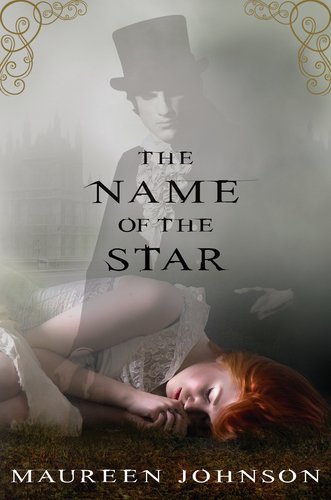
The Name of the Star

The Name of the Star by Maureen Johnson

The day Louisiana teenager Rory Deveaux arrives in London marks a memorable occasion. For Rory, it's the start of a new life at a London boarding school. But for many, this will be remembered as the day a series of brutal murders broke out across the city, gruesome crimes mimicking the horrific Jack the Ripper events of more than a century ago.


Soon "Rippermania" takes hold of modern-day London, and the police are left with few leads and no witnesses. Except one. Rory spotted the man police believe to be the prime suspect. But she is the only one who saw him. Even her roommate, who was walking with her at the time, didn't notice the mysterious man. So why can only Rory see him? And more urgently, why has Rory become his next target? In this edge-of-your-seat thriller, full of suspense, humor, and romance, Rory will learn the truth about the secret ghost police of London and discover her own shocking abilities. -Plot summary borrowed from Goodreads

I didn't read the description very carefully for this book. I saw the GORGEOUS cover, something about Jack the Ripper and maybe ghosts, and knew I had to have it. I'll admit I was disappointed for about half a minute when I realized that this is set in contemporary London and featured an American heroine (I'm an Anglophile. It's a disease). But after that 30 seconds was over, you couldn't have pulled this book out of my hands for love or money.

It. Is. So. Good. Rory's voice rings true immediately and she is a bunch of fun. I was amazed at how authentically written both the American and English characters were, so I checked the bio flap and it turns out she spends her time in both countries. The only other writer I know of who can capture both voices so convincingly is Joss Whedon, who spent much of his student life in England. But I ramble.

This works so well as an American in England story, a school story, a crime thriller (interspersed with Rory's story are occasional chapters detailing the misdeeds of "the modern Ripper," a ghost story, and best and most surprisingly, a paranormal investigation story!! My favorite! ^_^

I spent my time equally snorting over my tea and being on the edge of my seat worrying about the Ripper. Best of all, this is apparently the first in a planned series: The Shades of London. I'm crossing my fingers that the next installments are as good.

Tuesday, November 22, 2011

Return of the Dapper Men

Return of the Dapper Men by Jim McCann and Janet Lee

Enter a world in between time, where children have played so long it's almost become work, machines have worked so long they have begun to play, and all the clocks have stopped at the same time. This is how this land has remained, until 314 dapper-looking gentlemen rain down from the sky and set off in different directions to start the world anew. Now Ayden, the only boy to still ask questions; Zoe, the robot girl all other machines hold dear; and the Dapper Man known only as "41" must discover what happened that made time stop, understand what their true places are in this world, and learn what "tomorrow" really means. The sun is setting for the first time in memory, and once that happens, everything changes!

The Return of the Dapper Men is a visually stunning fairy tale that combines steampunk with fantasy and science fiction with Renaissance style, brought to life from the minds of award-winning playwright and comic book writer Jim McCann (New Avengers: The Reunion) and critically acclaimed visual artist Janet Lee. Together they have created a world where J.M. Barrie, Lewis Carrol, and Maurice Sendak meet Jim Henson and Tim Burton. All sharply dressed in a pin-stripe suit and a dapper bowler hat. -Plot summary borrowed from Goodreads


Since I diverged from the "spooky" theme to post about the Steampunk anthology already, I thought I might squeeze in another off-theme book. This graphic novel is honestly a piece of art. If you are interested in reading it, please do yourself a favor and read from a hard copy rather than an ereader. This way, you will get to appreciate the whole effect of the book's construction, from the slightly textured cover, to the endpapers, to the bonus artwork at the back of the book. And don't miss the introduction from, slightly oddly, Tim Gunn! I'm not one hundred percent clear on why Project Runway's fashion guru and dispenser of calm was asked to write the introduction, although Jim McCann describes him as "the original dapper man" on the dedications page. Anyway. 


The art is gorgeous and stunning, the story is enchanting, and this work is an ode to so many good things: stories, being yourself, silliness, wisdom, and nice warm cups of tea. As stated in the summary, this work would certainly appeal to fans of J.M. Barrie, Lewis Carrol, Tim Burton, etc. I would add Neil Gaiman and Norton Juster to the list, and I can't believe that no other reviews have pointed out how endearingly similar the Dapper Man known as "41" is to a certain Doctor....


This is a must for fans of Steampunk, graphic novels, or anyone interested in but weighed down by the dystopian trend.

Monday, November 21, 2011

Steampunk!

Steampunk!: An Anthology of Fantastically Rich and Strange Stories  edited by Kelly Link and Gavin J. Grant

Imagine an alternate universe where romance and technology reign. Where tinkerers and dreamers craft and re-craft a world of automatons, clockworks, calculating machines, and other marvels that never were. Where scientists and schoolgirls, fair folk and Romans, intergalactic bandits, utopian revolutionaries, and intrepid orphans solve crimes, escape from monstrous predicaments, consult oracles, and hover over volcanoes in steam-powered airships. 

Here, fourteen masters of speculative fiction, including two graphic storytellers, embrace the genre’s established themes and refashion them in surprising ways and settings as diverse as Appalachia, ancient Rome, future Australia, and alternate California. Visionaries Kelly Link and Gavin J. Grant have invited all-new explorations and expansions, taking a genre already rich, strange, and inventive in the extreme and challenging contributors to remake it from the ground up. The result is an anthology that defies its genre even as it defines it. -Plot summary borrowed from Goodreads


I've been interested in Steampunk for a long time in a sort of vague "well my friends are into it, and I like Victorian clothing and twisty copper/bronze metalwork, so maybe I like Steampunk?" way. When I saw this anthology on the shelf, and noticed that it included stories by some of my favorite authors (Garth Nix, Holly Black, Libba Bray), I thought I would give it a shot. I'm glad I did.


There is a great mix of stories here: some funny, some adventurous, several at least slightly creepy and nearly all will kickstart your imagination. There is something for everyone here, and I really enjoyed that the editors included two graphic stories. If you are already a fan of the genre, or want to get a better feel for it, I would definitely recommend this anthology.

NB: I am soooo not a Steampunk expert. From my limited knowledge, I can tell you that you might enjoy the genre/movement/fashion trend/scene if:

-You are a fan of Westerns, Sci-Fi, and/or Period Pieces in general
-You enjoyed The League of Extraordinary Gentlemen (film adaptation, not graphic novel), The Golden Compass (film version),  Howl's Moving Castle (the Hiyao Miyazaki film adaptation), Sherlock Holmes (the one with Robert Downey Jr.), Wild Wild West, Last Exile, or other works from this list
-Corsets and full skirts sound like fun everyday wear (I know they do to me!)
-You enjoy top hats, goggles, pocket watches, bronze, copper, brass, tubes, gears, automata, clockwork, difference engines, alternate histories, and of course, steampowered mechanical... things

For more info on the genre, check out Steampunk.com or go to Etsy and just do a search for "Steampunk." There are thousands of examples of gorgeous hand-made jewelry, fashion, statues, paintings, odd little things with gears, and more.