Friday, May 24, 2013

What's on my hold list?

Hey guys. It's been a whole month since my last review! Sorry about that, job applications and reading some more adult stuff again has cut into my teen reading and blogging time. Speaking of, I highly recommend the following!
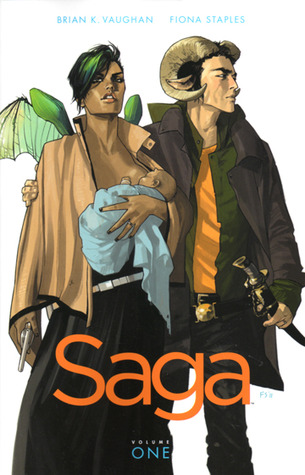
Saga by Brian K. Vaughan

Vaughan, author of Y: The Last Man, Pride of Baghdad, Runaways, and many more is one of my very favorite graphic novel authors of all time. His characters are full of life, his dialogue is right up there with Whedon and Palladino, and his stories are all about real people (or, you know, lions) caught up in sweeping stories. Saga does not disappoint, and if anything the intergalactic scale just ups his game. The art, done by illustrator Fiona Staples, is gorgeous and enhances both the characterization and the action. It reminded me at different times of The Compleat Moonshadow, Firefly, and Vaughan's other stories. And this is only the first volume!

(Apparently, Saga is currently topping several user-voted list on Goodreads of best graphic novels, beating out classics such as Watchmen, The Sandman, and Maus. I'm not saying that Saga is better or more important than those, but it does suggest that this is a series to watch out for!)

Anyway. I thought I'd list some of the books on my To Read list for the summer. Some are sequels to books I've already reviewed, others are brand shiny new. You may notice a certain color trend...
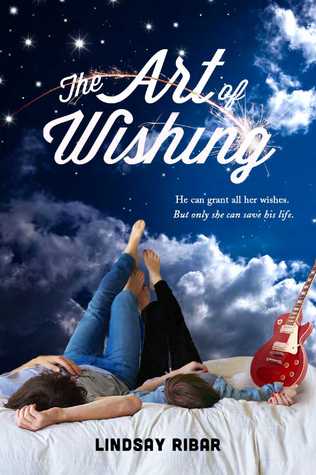
The Art of Wishing by Lindsay Ribar
Out now

Fluffy paranormal romance with a boy genie? Sure, sounds interesting, and there are good murmurings on Goodreads about this one. Cute cover, too!


Unnatural Creatures: Stories Selected by Neil Gaiman
Out now


All stories in this collection have been previously published, and the authors range from E. Nesbitt to Diana Wynne Jones. Some creatures you've heard of (griffins, werewolves, manticores), while others are likely new (sun-birds, cockatucans, and more). Hurray!


PODs by Michelle K. Pickett
June 4th

What time is it? Apocalypse time! A virus has savaged the earth, with a few survivors huddled in goverment-built underground shelters. When they finally emerge, it is to the horrifying discovery that the virus has mutated the remaining human population, creating a race of monsters. Honestly, I think I've read one apocalypse/dystopian story too many, but this has an interesting premise and the chance for some good Fallout vibes and action.


Belle Epoque by Elizabeth Ross
June 11th

Plain Maude is hired to be a "friend" to beautiful and aristocratic Isabelle- really, she's there to make her look better in comparison, which sounds exactly like something that could have happened in the bizarre 19th century. It's also set in Paris, which doesn't really matter except that it's a nice change from another historical fiction book set in London. This book promises social intrigue, romance, and ballgowns. Sign me up!


Star Cursed by Jessica Spotswood
June 18th

A corner of my brain has been in a quiet frenzy for this ever since I read the first book, Born Wicked, last summer. Alternate 19th century New England! Secret witches! A creepy Puritanical government! A bookish love interest! *swoons*


The Ocean at the End of the Lane by Neil Gaiman
June 18th

The first Neil Gaiman novel for adults since Anansi Boys. 'nuff said.


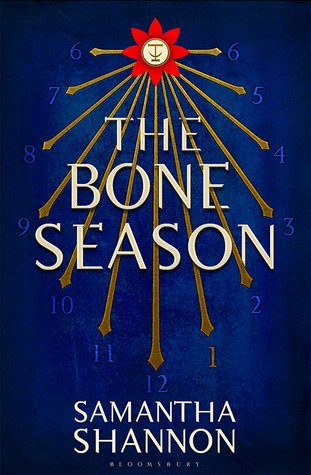
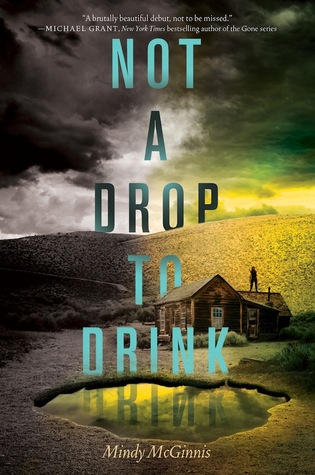
Between the Devil and the Deep Blue Sea by


.... for the book. Not trying to survive in a dehydrated terrorscape. I would not do well there.


So there you have it! These are some of the books I'm really looking forward to reading this summer. Don't even get me started on the fall, when we get books like The Dream Thieves (the sequel to Maggie Stiefvater's The Raven Boys), Across a Star-Swept Sea (book 2 in Diana Peterfreund's For Darkness Shows the Stars series), Kinslayer (the follow-up to Stormdancer by Jay Kristoff), AND The Girl Who Soared Over Fairyland and Cut the Moon in Two by Catherynne M. Valente (book 3 of September's adventures in Fairyland!). Eee!

What's on your hold list?

Wednesday, May 22, 2013

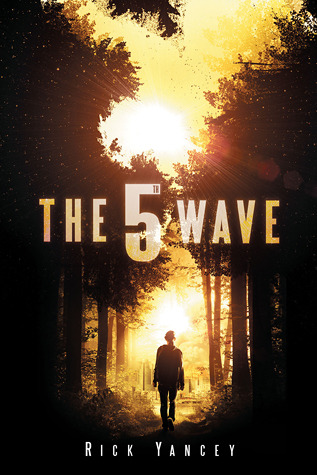
The 5th Wave

The 5th Wave by Rick Yancey

After the 1st wave, only darkness remains. After the 2nd, only the lucky escape. And after the 3rd, only the unlucky survive. After the 4th wave, only one rule applies: trust no one.

Now, it’s the dawn of the 5th wave, and on a lonely stretch of highway, Cassie runs from Them. The beings who only look human, who roam the countryside killing anyone they see. Who have scattered Earth’s last survivors. To stay alone is to stay alive, Cassie believes, until she meets Evan Walker. Beguiling and mysterious, Evan Walker may be Cassie’s only hope for rescuing her brother—or even saving herself. But Cassie must choose: between trust and despair, between defiance and surrender, between life and death. To give up or to get up.
-Plot summary borrowed from Goodreads


There's been a LOT of buzz about this one (the phrase "the next Hunger Games" has been tossed around, and for good reason), so by rights I should have posted this weeks ago. Ah well.  

This was an intense read, and since so much of the tension relies on knowing as little as the characters, I'll try not to give anything away. Cassie is a fierce and believable heroine- I've seen some critiques of her character, but honestly I think given how quickly and brutally she was forced to grow up, I think it makes sense. The alien invasion aspects are pretty damn scary, as is much of the human response to it. I didn't love the romance, but what are you going to do? For the most part, this is a gripping thriller that may help ease the pangs of waiting for Catching Fire and the new season of The Walking Dead.

Wednesday, May 8, 2013

Geektastic: Stories from the Nerd Herd

Geektastic: Stories from the Nerd Herd edited by Holly Black and Cecil Castellucci

Acclaimed authors Holly Black (Ironside) and Cecil Castellucci (Boy Proof) have united in geekdom to edit short stories from some of the best selling and most promising geeks in young adult literature: M.T. Anderson, Libba Bray, Cassandra Clare, John Green, Tracy Lynn, Cynthia and Greg Leitich Smith, David Levithan, Kelly Link, Barry Lyga, Wendy Mass, Garth Nix, Scott Westerfield, Lisa Yee, and Sara Zarr.

With illustrated interstitials from comic book artists Hope Larson and Bryan Lee O'Malley, Geektastic covers all things geeky, from Klingons and Jedi Knights to fan fiction, theater geeks, and cosplayers. Whether you're a former, current, or future geek, or if you just want to get in touch with your inner geek, Geektastic will help you get your geek on!
-Plot summary borrowed from Goodreads


This was a fun, fairly quick read that did touch on most aspects of fandom (cosplaying, cons, fic, online communities, bonding with people over weirdly specific things, etc), as well as mentioning most of the big geek touchstones (Star Trek, Buffy, Doctor Who, Star Wars, The Rocky Horror Picture Show, and so forth).  None of the stories were AMAZING, but they were mostly at least entertaining, and some stood out. I really enjoyed the Klingon/Jedi love story, and the one about a Buffy fan defending Dawn (no she's not my favorite either, but is she really deserving of so much hate, especially after Season Seven? I think not.) If you want to enjoy some geek nostalgia, or learn what some of your favorite writers fangirl about, this is the place to do it.


Thursday, April 25, 2013

The Lost Girl

The Lost Girl by Sangu Mandanna

Eva's life is not her own. She is a creation, an abomination--an echo. She was made by the Weavers as a copy of someone else, expected to replace a girl named Amarra, her "other," if she ever died. Eva spends every day studying that girl from far away, learning what Amarra does, what she eats, what it's like to kiss her boyfriend, Ray. So when Amarra is killed in a car crash, Eva should be ready.

But sixteen years of studying never prepared her for this.

Now she must abandon everything and everyone she's ever known--the guardians who raised her, the boy she's forbidden to love--to move to India and convince the world that Amarra is still alive.

What Eva finds is a grief-stricken family; parents unsure how to handle this echo they thought they wanted; and Ray, who knew every detail, every contour of Amarra. And when Eva is unexpectedly dealt a fatal blow that will change her existence forever, she is forced to choose: Stay and live out her years as a copy or leave and risk it all for the freedom to be an original. To be Eva.
-Plot summary borrowed from Goodreads


I'm not going to write a nitpicky review because I LOVED this book. I loved the concept, which is very sci-fi and by that I mean, something I can certainly believe people would do if technology allowed. And, as in the best sci-fi, Mandanna asks a lot of hard-hitting questions about the implications, and consequences, of what this technology would mean. She writes elegantly about life, love, loss, the lengths people will go to to protect their own, and what it means to be human. After reading so many Hunger Games clones, I was honestly surprised and relieved to find something new (and no, this is not a dystopian novel, although readers who enjoy them will very likely love this as well).

At 432 pages, this not a short read, but I was so caught up in Eva's story that I read it in just a few sittings. The characters are complex and very, very human, and I don't think I've wanted a heroine to succeed so badly since Katniss. Eva is wonderful. I also loved all the ties to Frankenstein, which could have been heavy handed but instead feel like a natural progression, and prove that it's still a relevant book to this day.

There are a few tiny issues, like the ending feeling slightly rushed, but I don't care. I was fully invested in the story and at no point did Mandanna let me down. I'll be on the lookout for more of her books and I definitely recommend this one.

Ask the Passengers

Ask the Passengers by A.S. King

Astrid Jones desperately wants to confide in someone, but her mother's pushiness and her father's lack of interest tell her they're the last people she can trust. Instead, Astrid spends hours lying on the backyard picnic table watching airplanes fly overhead. She doesn't know the passengers inside, but they're the only people who won't judge her when she asks them her most personal questions . . . like what it means that she's falling in love with a girl.

As her secret relationship becomes more intense and her friends demand answers, Astrid has nowhere left to turn. She can't share the truth with anyone except the people at thirty thousand feet, and they don't even know she's there. But little does Astrid know just how much even the tiniest connection will affect these strangers' lives--and her own--for the better.
-Plot summary borrowed from Goodreads


I was all set to love this book, and for the first few chapters I did. It is a mostly uplifting read, and it does have a lot going for it, but ultimately I think it is flawed, and just not what it could have been. Let's break it down by pros and cons. 

Pros
-It's compelling. I read it in one day, completely buying into Astrid's story and narrative voice.
-The tone is well-balanced, moving believably from tense, emotional drama to humor to pathos and back again
-King addressed bullying, specifically of GLBTQ teens, in very direct terms. Truly awful, hateful things are said to/about Astrid and her friends, and King does a good job of showing what happens when people turn a blind eye to such reprehensible behavior. Also, bonus points for showing that teachers can be at least as gossipy and negative as their students.
-Astrid's inner conflict, questions and development ring true, and she gets major props from me for standing up for herself in the face of pressure and prejudice
-There is an emphasis on the need people have for respect, privacy, and space. Bonus points for King emphasizing that gay relationships are no different from straight relationships, and that it is problematic for people to assume it's all about sex
-I liked the idea of Astrid "sending love" to plane passengers, and their vignettes served to give the story a sort of all ages appeal, and to remind readers that everyone has their own unique set of emotional challenges, no matter their age, gender, background or circumstances
-Astrid's family is complicated, flawed, and fascinating. There are dynamics here I've seen in real families, and watching the four of them interact with each other was one of the most interesting things about the book.

That all sounds great, yeah? And those parts are. Unfortunately, the book has some issues that detract from all that a bit.

Cons
-Several relationships are problematic to me. Astrid's girlfriend Dee pressures her to move more quickly than Astrid is comfortable with- and Astrid does speak up. All well and good. But Astrid goes from feeling uncomfortable with this and unsure if she really likes Dee to being madly in love. Umm... k... Something similar happens with Astrid's friends. In one chapter it seems as though they have had a major falling out, and in the last it seems as though things are perfectly normal. 
-Astrid makes everything about her. Sure she's the main character, but even allowing for that conceit it gets old fast. Nothing is ever her fault (in her eyes), all the other characters need to take things at her speed when she says so, and god help them if they move too fast or slow for her. She can be preachy, and while she does develop in some ways (comes to terms with her own sexuality), she doesn't in others (keep an open mind, act more generously, give back). Here's an example of what I mean by missed opportunities- towards the end of the book when Astrid is resolving her baggage, she is portraying Socrates for her humanities class, going around the school and militantly debating people. Ok, great, if pushy. However, she had previously remarked that it was only "other, possibly fictional schools" that had GLBTQ clubs. I couldn't help thinking that it would have been better for her to work on starting one of these, especially since her humanities teacher, one of the only Allies she mentions, would have been the perfect faculty advisor. Maybe that's a weird quibble to have, but it would have been nice to see Astrid stepping up to help others instead of making herself feel smart. 
-Speaking of the school, and the students.... Other than Astrid and her friends, everyone seems to be a small-minded hateneck in this town. Worse, they're all decades old stereotypes. The jocks are oversexed, meat-headed bullies. The cheerleaders are superficial, snipey gossips. Where's the complexity? The acknowledgement that high school is tough all around, and that while that obviously does not excuse bullying, it goes partway toward explaining it? I'd have been much happier with some shades of grey, some discussion of why kids lash out at each other, and what can be done to improve things. Instead we get Astrid deciding to tune out the unpleasantness, without any change or growth.


Overall this was an absorbing read with plenty of realistic teen angst and some moving relationships, but it's weighed down by stereotypes and missed opportunities. I think Emily M. Danforth did a far better and more nuanced job of portraying a girl in a conservative small town questioning her sexuality in The Miseducation of Cameron Post, and for a better look at issues of high school cliques and bullying I'd recommend Before I Fall and The Geeks Shall Inherit the Earth.

Thursday, April 18, 2013

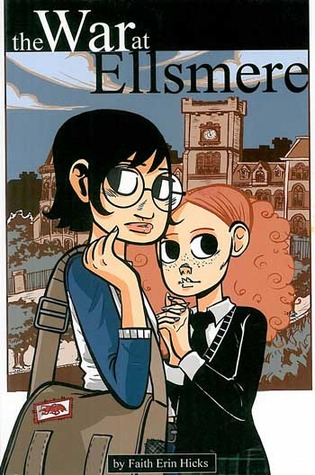
The War at Ellsmere

The War at Ellsmere by Faith Erin Hicks

Zombies Calling creator Faith Erin Hicks brings her manga-fueled art style and pop-culture sensibilities to girl's boarding schools in her latest book The War at Ellsmere. Jun is the newest scholarship student at the prestigious Ellsmere girls' boarding school - but to a lot of the privileged rich girls, "scholarship student" is just a code for "charity case." Fortunately, Jun has an ally in the quirky Cassie, who swears the stories about the mysterious white deer that lives in the forest outside of the school are true. Between queen bees and mythical beasts, Jun has quite the school year ahead of her. -Plot summary borrowed from Goodreads

I've raved about Faith Erin Hicks here before, and will very likely continue to do so as I track down more of her graphic novels. I love her characters- unique, intelligent, layered- and I love the plots she comes up with- characters dealing with real world issues against an (often) supernatural backdrop. Come to think of it, I love her work and Paranorman for kind of the same reasons. If non-genre media were always so skilled at portraying such human characters I think we'd all be better off. 

The best summary I could give comes from Jun herself: "It's like Upstairs/Downstairs meets Lord of the Flies. In plaid skirts. And sweater vests. It's so weird." But you'll love it.

Wednesday, April 17, 2013

In the Shadow of Blackbirds

In the Shadow of Blackbirds by Cat Winters

In 1918, the world seems on the verge of apocalypse. Americans roam the streets in gauze masks to ward off the deadly Spanish influenza, and the government ships young men to the front lines of a brutal war, creating an atmosphere of fear and confusion. Sixteen-year-old Mary Shelley Black watches as desperate mourners flock to séances and spirit photographers for comfort, but she herself has never believed in ghosts. During her bleakest moment, however, she’s forced to rethink her entire way of looking at life and death, for her first love—a boy who died in battle—returns in spirit form. But what does he want from her?

Featuring haunting archival early-twentieth-century photographs, this is a tense, romantic story set in a past that is eerily like our own time.
-Plot summary borrowed from Goodreads


There is a lot going on in this book (a flu outbreak, WWI, spiritualism, photography, true love), and it covers a lot of ground genre-wise (historical, mystery, romance, horror, a hint of Steampunk, meditations on war abroad and at home). Thankfully, Winters blends these elements into a pretty cohesive whole, and as in Libba Bray's excellent The Diviners, the historical setting and disparate but complementary elements come together to tell a compelling and atmospheric story.

I griped about the portrayal of a headstrong and scientifically minded heroine  in The Madman's Daughter (another period piece) because that character felt forced to me. Here we have Mary Shelley, who, despite having similar inclinations in a setting not too far in the future, seems believable. For one thing, her family clearly helped to foster her talents and interests (her mother was a physician and her father named her after the author of Frankenstein- obviously written by a talented woman with an interest in science). Sure some people look at her askance when she takes apart machines to figure out how they tick, but there is no tedious "a WOMAN doing science? Heaven forfend!" hand-wringing to drag the reader down. Oops, tangent. Anyway.....

I went into this book not quite knowing what to expect, other than being excited about the spirit photography elements, which I think was a good thing. I won't go into much more detail here, other than to say that I thoroughly enjoyed this read and would recommend it to fans of dark historical fiction and stories that will keep you guessing.